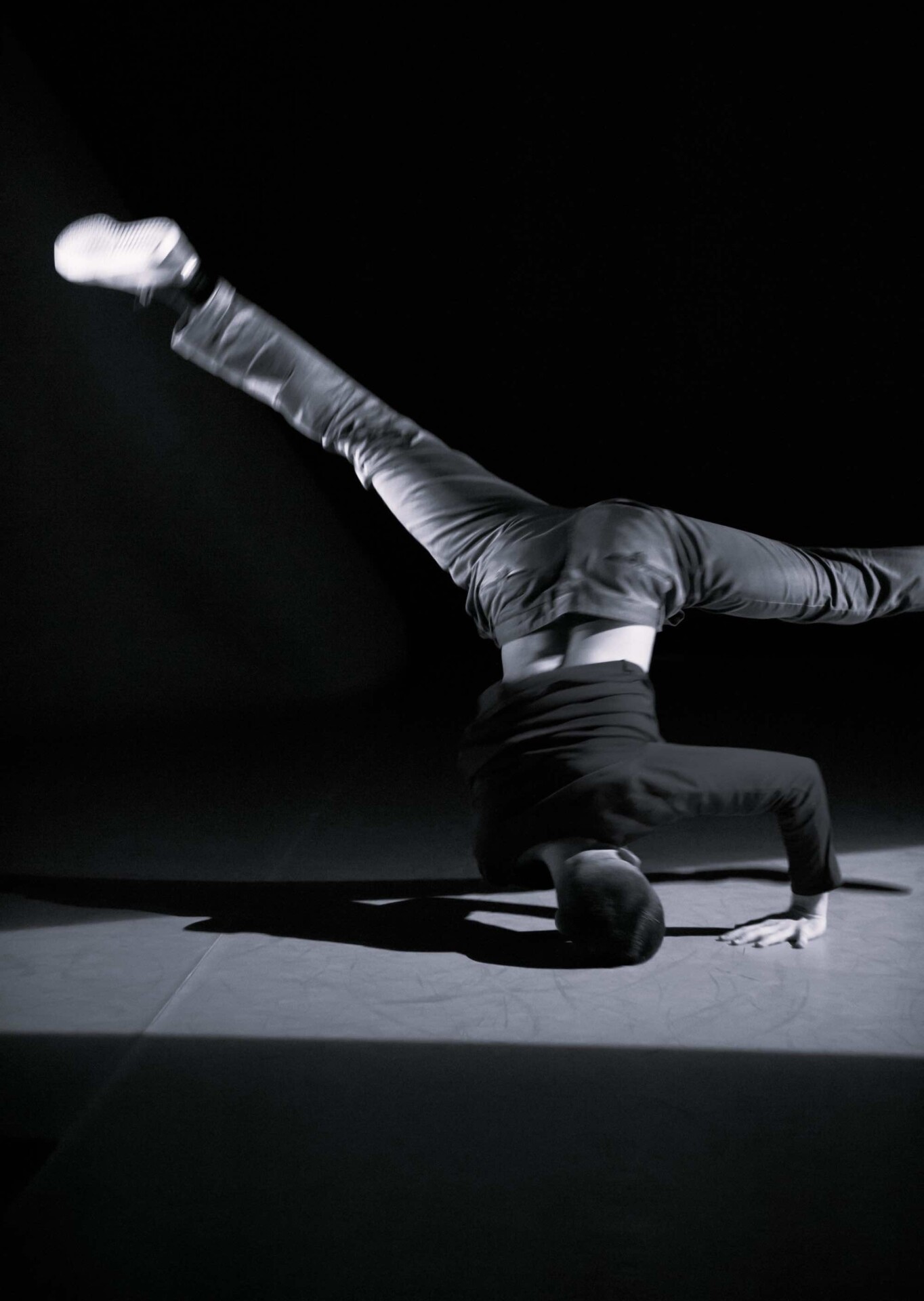
Dara è una parola semplice, dolce e ricca di significato, che attraversa culture ed epoche. In ebraico significa “perla di saggezza” o “albero”. In arabo evoca il “valore” e la “generosità”. In persiano è un nome maschile che significa “possessore” o “ricco”. In celtico deriva da derw, “quercia”, simbolo di forza e saggezza. Questo duo di danza esplora il legame intimo tra due uomini, una relazione di accompagnamento, protezione e trasmissione. Ispirato dalla filiazione — come quella tra padre e figlio — Dara incarna anche un gesto umano universale. Oltre la trasmissione biologica, interroga le nostre radici, le nostre basi e gli apprendimenti che ereditiamo e scegliamo. La trasmissione è un dialogo vivo tra origine e scelta. In un mondo spesso segnato dall’isolamento o dal ripiegamento, Dara afferma la forza di un legame aperto, che supera confini personali e comunitari. È un invito alla benevolenza condivisa e alla connessione umana universale. Senza parole, lo spettacolo rivela questa intimità fragile e potente, dove benevolenza, forza e libertà si intrecciano nel movimento. Dara testimonia un’esperienza umana universale: il legame che ci unisce, ci sostiene e ci fa avanzare, insieme.
BIO
Nato a Roubaix nel 1972, Brahim Bouchelaghem scopre l’hip-hop nel 1984 e il mondo delle battles, che frequenta ancora parallelamente alla sua carriera artistica. Danzatore autodidatta, nel 1992 entra nella compagnia di F. Berki, poi nel 1998 in Käfig di M. Merzouki, e successivamente nelle compagnie di K. Attou e Frank II Louise. Nel 2004 crea il suo primo solo, Zahrbat, omaggio al padre, e nel 2005 fonda la compagnia omonima. Collabora con Carolyn Carlson (2007-2009), crea Davaï Davaï (2010), Tracks e Hiya (2012), stabilisce la sua compagnia allo Studio 28 di Roubaix (2013) e firma Sillons (2014) e CRIIIIC! (2016). Nominato Cavaliere delle Arti e delle Lettere (2015) e cittadino onorario di Roubaix (2016), continua a creare e girare in Francia e all’estero: Motion (2017), Usure e Run (2018), Almataha (2021), SISTO (2024) e sta preparando Malmus (2026). Nel 2025 celebra i 20 anni della compagnia Zahrbat.
Dara is a simple, gentle, and meaningful word that spans cultures and ages. In Hebrew, it means “pearl of wisdom” or “tree.” In Arabic, it evokes “value” and “generosity.” In Persian, it is a masculine name meaning “possessor” or “wealthy.” In Celtic, it derives from derw, “oak,” a symbol of strength and wisdom. This dance duo explores the intimate bond between two men, a relationship of guidance, protection, and transmission. Inspired by filiation — like that between father and son — Dara also embodies a universal human gesture. Beyond biological transmission, it questions our roots, foundations, and the learnings we inherit and choose. Transmission is a living dialogue between origin and choice. In a world often marked by isolation or withdrawal, Dara affirms the strength of an open bond that transcends personal and community boundaries. It is a call for shared benevolence and universal human connection. Without words, the performance reveals this fragile yet powerful intimacy, where kindness, strength, and freedom intertwine in movement. Dara testifies to a universal human experience: the bond that unites us, sustains us, and propels us forward, together.
BIO
Born in Roubaix in 1972, Brahim Bouchelaghem discovered hip-hop in 1984 and the world of battles, which he still participates in alongside his artistic career. A self-taught dancer, in 1992 he joined F. Berki’s company, then in 1998 M. Merzouki’s Käfig, and later the companies of K. Attou and Frank II Louise. In 2004, he created his first solo, Zahrbat, a tribute to his father, and founded his eponymous company in 2005. He collaborated with Carolyn Carlson (2007-2009), created Davaï Davaï (2010), Tracks and Hiya (2012), established his company at Studio 28 in Roubaix (2013), and created Sillons (2014) and CRIIIIC! (2016). Knight of Arts and Letters (2015) and honorary citizen of Roubaix (2016), he continues to create and tour in France and abroad: Motion (2017), Usure and Run (2018), Almataha (2021), SISTO (2024), and is preparing Malmus (2026). In 2025, he celebrates 20 years of Zahrbat.